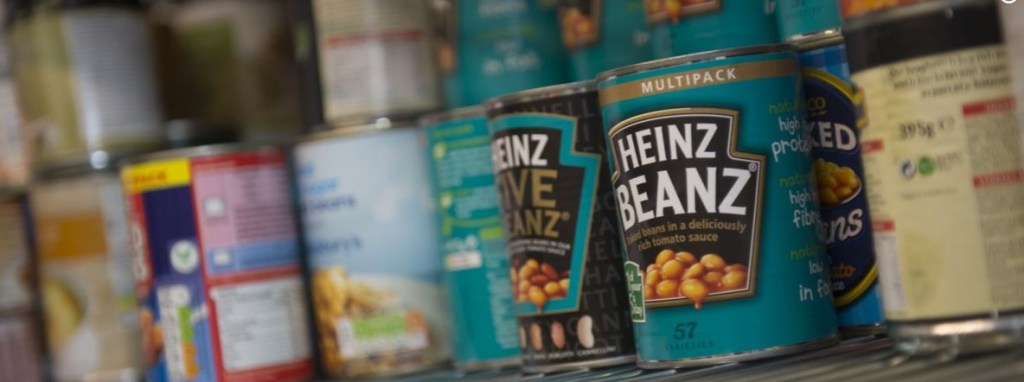
Abraham Maslow’s hierarchy of need suggests physiological needs is what drives a human to survive, Maslow explains that humans have basic needs that must be met, and these needs are what keeps a human motivated to reach other levels of achievement (Sheikh and Ameijde, 2022). Homeostasis is also another way for a body to fully function which can only be balanced when physiological needs are met as the body will need stabilising through access to water, foods and chemical in a person’s blood. Without adequate access, a person would not be able to survive (Johnston et al, 2018; ).
The UK government and the Child Poverty Action Group (CPAG) have agreed “the inability to acquire or consume an adequate quality or sufficient quantity of food in socially acceptable ways, or the uncertainty that one will be able to do so” is known as food poverty (O’Connell et al, 2019; Francis-Devine et al, 2024). Children struggle to access food because of many factors, low income households, cost of nutritional foods, the 2 child benefit cap, unable to afford household bills and unemployment (Johnston et al, 2018). Barnardos (2024) states 3.4 million children in the UK are living in food poverty which has increased 20% since 2022.
Food poverty exists and should be viewed as a national concern (Cooper and Whyte, 2017). Families have become reliant on charities that provide food parcels as they are struggling to pay household bills from a low-income (Cooper and Whyte, 2017; Benefact Trust, 2024). The graph below highlights that children are the worst affected by food insecurity.

A lack of nutritional food for children can have a detrimental impact on their lives, Wickham et al (2016), Fitzgerald and Kay (2016) and Palaiologou (2016) all explain that child poverty has a damaging effect on children’s heath, development, life chances and in extreme cases results in infant mortality. Gallahue and Ozmun (2006) further states that if severe malnutrition occurs in the first four years of a child’s live they will never fully recover from the effects.
The human brain needs all the essential nutrients to form and maintain its structure therefore a child’s cognitive development is reliant on adequate nutrition and children who cannot access nutritional foods are at high risk of exhibiting weakened cognitive skills (Roberts et al, 2022). Knight (2017) states poverty has a negative impact on a child’s life and how emotional damage is an outcome for a child living in certain conditions. When children are brought up in poverty a cycle begins which can be viewed as an normal way of living, leading the child to remain in this process and become an adult who brings their own children up in society as a poor child (Schutter et al, 2023). As a young child I was brought up in a family structure of a lone parent family, the household income was from a reliance on financial support from the government and therefore access to food was a struggle, the cost of food was never within our budget. Leseman and Slot (2014) states “Poverty rates are especially high for young children, who grow up with several siblings in a low-income single parent families” which is a main factor that appears to be often connected to a child living in poverty (Stewart, Roberts, 2019).
The increasing price of food is a reasons why children are experiencing food poverty, this encourages families to purchase poor-quality food that does not offer goodness. Barret, Spires, and Vogel (2024 ) states when a person chooses to eat poor quality foods they are not considering the health risks, for example malnutrition is what effects a persons to gain weight which can lead to obesity and seeking support from health professional.
If like me you want to put an end to children going hungry then please sign my petition for the government to provide free school meals to all children in primary schools and early years settings.
Whilst this won’t end child poverty at least children in need can look forward one healthy meal a day!
References
Barnardos (2024) Changing childhoods. Changing lives. EMPTY PLATES AND COLD HOMES: What it’s like to grow up in poverty in 2024. Available at:https://www.barnardos.org.uk/sites/default/files/2024-09/Food%20and%20Fuel%20Report%20-%20for%20upload.pdf [Accessed: 31 May 2025]
Barrett, M. Spires, M. & Vogel, C. (2024). The Healthy Start scheme in England “is a lifeline for families but many are missing out”: a rapid qualitative analysis. BMC Med 22, 177 Available at: https://bmcmedicine.biomedcentral.com/articles/10.1186/s12916-024-03380-5 [Accessed: 31 May 2025]
Benefact Trust, (2024) Helping the Trussell Trust to combat a food bank crisis. Available at: https://www.benefacttrust.co.uk/news/helping-the-trussell-trust-to-combat-a-food-bank-crisis/ [Accessed: 31 May 2025]
Child Poverty Action Group (2023) Why universal free school meals is the right move. Available at: https://cpag.org.uk/news/why-universal-free-school-meals-right-move [Ac cessed: 27 May 2025]
Cooper, V, & Whyte, D (eds) (2017) The Violence of Austerity, Pluto Press, London. Available from: https://ebookcentral.proquest.com/lib/bolton/reader.action?docID=4861800&c=RVBVQg&ppg=105 [Accessed: 28 May 2025].
Fitzgerald, D and Kay, J. (2016) Understanding Early Years Policy, 4th Edition. London, SAGE Publishing Ltd
Francis-Devine, B. Malik, X. Roberts, N. (2024) Food poverty: Households, food banks and free school meals. House of Commons. Available at: https://commonslibrary.parliament.uk/research-briefings/cbp-9209/ [Accessed: 29 May 2025]
Gallahue, D and Ozmun, J (2006) Understanding Motor Development: Infants, Children, Adolescents, Adults (6th ed). New York: McGraw-Hill.
Johnston, J. Nahmad-Williams, L. Oates, R. and Wood, V (2018) Early Childhood Studies : Principles and Practice, Taylor & Francis Group, Oxford.
Knight, B (2017) Rethinking Poverty : What Makes a Good Society?, Policy Press, Bristol. Available from: https://ebookcentral.proquest.com/lib/bolton/reader.action?docID=31187545&ppg=58 [Accessed: 1 May 2025].
Leseman, P. P. M. and Slot, P. L. (2014) ‘Breaking the cycle of poverty: challenges for European early childhood education and care’, European Early Childhood Education Research Journal, 22(3), pp. 314–326. doi: 10.1080/1350293X.2014.912894. Available at: https://www-tandfonline-com.ezproxy.bolton.ac.uk/doi/full/10.1080/1350293X.2014.912894#abstract [Accessed:]
O’Connell, R. Knight, A. and Brannen, J. (2019) Living hand to mouth, Children and food in low-income families. Child Poverty Action Group. Available at: https://cpag.org.uk/sites/default/files/2023-08/Living%20Hand%20to%20Mouth%20full%20book.pdf [Accessed: 29 May 2025]
Palaiologou, I. (2016) The Early Years Foundation Stage. 3rd Edition. London, Sage publishers.
ROBERTS, M., TOLAR-PETERSON, T., REYNOLDS, A., WALL, C., REEDER, N. and GINA, R.M., (2022) The Effects of Nutritional Interventions on the Cognitive Development of Preschool-Age Children: A Systematic Review. Nutrients, 14(3), pp. 532. Available at: https://www.proquest.com/docview/2627824358?parentSessionId=mg39mclteWB%2FvlMsNt3T7g39c4E4oqxmKGG1boLoypI%3D&pq-origsite=summon&searchKeywords=Cognitive%20development%20thrives%20on%20nutrition&accountid=9653&sourcetype=Scholarly%20Journals [Accessed: 21 May 2025]
Schutter, O. Frazer, H. Guio, AC. and Marlier, E. (2023) The Escape from Poverty : Breaking the Vicious Cycles Perpetuating Disadvantage Available at: https://ebookcentral.proquest.com/lib/bolton/reader.action?docID=31361109&ppg=2 (Accessed: 30 May 2025)
Sheikh, W. and Ameijde, J. (2022) Promoting livability through urban planning: A comprehensive framework based on the “theory of human needs”, Cities. Available at: https://www-sciencedirect-com.ezproxy.bolton.ac.uk/science/article/pii/S0264275122004115 [Accessed: 31 May 2025]
STEWART, K. and ROBERTS, N., (2019) Child Poverty Measurement in the UK: Assessing Support for the Downgrading of Income-Based Poverty Measures. Social Indicators Research, 142(2), pp. 523-542. Available at: https://www.proquest.com/docview/2041056010?parentSessionId=OxrnptLom6MdcFNpKgjpwz25E8kaYdpg5h19ymwMQCk%3D&pq-origsite=summon&searchKeywords=child%20poverty%20uk&accountid=9653&sourcetype=Scholarly%20Journals [Accessed: 31 May 2025]
Wickham, S. Anwar, E. Barr, B. Law, C. Taylor-Robinson, D. (2016) Poverty and child health in the UK: using evidence for action Archives of Disease in Childhood 2016;101:759-766. Available at: https://adc.bmj.com/content/101/8/759 Accessed [01 June 2025]

 Food For Every Child