Having an understanding of child development is extremely important for parents (Grenier and Vollans, 2023), this will enable parents to fully understand the impact that food poverty can have on their child.
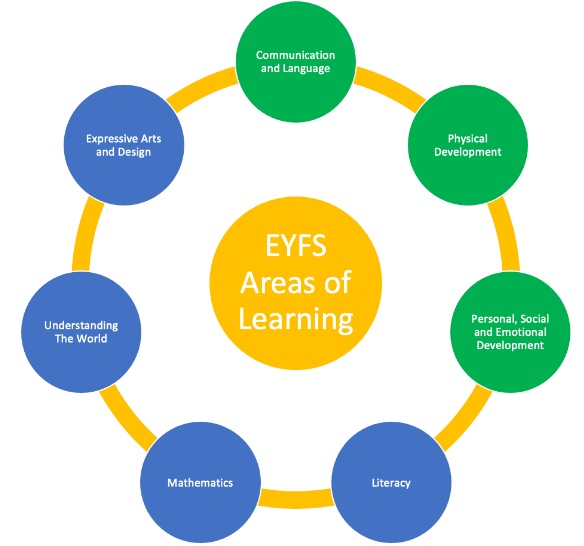
There are 7 areas that must be implement into a child’s learning from birth to five years (DfE, 2024; Neaum, 2022). Literacy, mathematics, understanding the world, communication and language, physical development, personal, social and emotional development are the seven learning areas that children must develop for them to have the best start to life. Practitioners supporting children within nurseries and schools must ensure “Every child is a unique child, who is constantly learning” (DfE,2024, p. 7) and when a child is part of an environment that offers positive learning experiences, a child’s learning and development progresses. Early life characteristics such as health, nutrition, caregiving, and access to learning are key to development, especially during the first years of a child’s life (Palacios et al, 2022 and Barton et al, 2024).
The Department for Education (2024) states how providers and practitioners must ensure children are remaining in good health while progressing with their learning and development and that knowledgeable practitioners should be aware of the importance of access and intake of food that would benefit a child’s development. The Department of Education (2025) explains a child should have a delightful experience when having a meal in a school environment. The school food standards (DfE, 2025) also requires practitioners to ensure children know about what is involved in a healthy diet, that nutrition is beneficial for a child’s daily routine in a school setting.
Practitioners must model and guide children on how to lead a healthy lifestyle. A child who socialises with adults and peers when having access to a free school meal will not just learn from accessing food, but will have an experience of socialising through communicating with peers, sharing language and being part of new experiences.
Legislation is in place to mandate school and early year settings ensure children receive the correct care and support with their learning and development. The children’s Act 2006 requires providers such as nurseries, child minders and schools to implement and adhere to standards being met within the Early Years Foundation stage (EYFS) statutory guidance (DfE, 2024). Within this guidance a child’s personal social and emotional development is addressed as being extremely beneficial for a child’s cognitive development. The adults that are arounds the children will have the ability to model what a healthy lifestyle involves and the children will observe and gain knowledge from them. Practitioners should provide guidance on how to choose, prepare and eat healthy foods (DfE, 2024). Children will also learn how to look after their own body independently to live a healthy lifestyle later in life (DfE, 2024). Knowing this information and how important this guidance must positively effect a child’s development, why are children missing out on meals or having access to cheap foods.
The environments a child grows up in (home, nursery and school) will influence how healthy they are. A nutritious diet is not always accessible in areas around England which can have a significant impact on a child’s health and body weight, sometimes leading to obesity (Impact on Urban Health, no date; Alberdi et al, 2016).
Children who experience food poverty will experience hunger, and according to Apodaca (2010) children who lack food will develop stunted growth caused by malnutrition. The World Health Organization (2023) explains that when a child develops stunting the brain may never develop fully. Children living in the UK are also more likely to underperform at school, are more likely to have more accidents, develop tooth decay and become over weight (Roberts, 2012). In today’s society it is unacceptable for a child to go without food especially given the consequences this can have on their future. Please sign my petition today to get the government to provide all children one free healthy meal a day.

References
ALBERDI, G., MCNAMARA, A.E., LINDSAY, K.L., SCULLY, H.A., HORAN, M.H., GIBNEY, E.R. and MCAULIFFE, F.M., (2016) The association between childcare and risk of childhood overweight and obesity in children aged 5 years and under: a systematic review. European journal of pediatrics, 175(10), pp. 1277-1294. Available at: https://www.proquest.com/docview/1822042457?parentSessionId=HlvRTUCV5WGKj9fGqItmJ%2FvkFKvlt46CAAVv4lSavlY%3D&pq-origsite=summon&searchKeywords=child%20obesity&accountid=9653&sourcetype=Scholarly%20Journals [Accessed: 1 June 2025]
Apodaca, C. (2010) Child Hunger and Human Rights : International Governance, Taylor & Francis Group, Oxford. Available at: https://ebookcentral.proquest.com/lib/bolton/reader.action?docID=496326&c=UERG&ppg=16 [Accessed: 1 June 2025].
BARTON, J.M. MCMATH, A.L. MONTGOMERY, S.P. DONOVAN, S.M. and FIESE, B.H. (2024) Longitudinal changes in home food availability and concurrent associations with food and nutrient intake among children at 24–48 months. Public health nutrition, 27(1). Available at: https://www.proquest.com/docview/2931501764?parentSessionId=c3UMO5ZxKApiI0sbMgLrgzt33wYwJ40U24WEX3DilGw%3D&pq-origsite=summon&searchKeywords=what%20is%20nutrients%20for%20children&accountid=9653&sourcetype=Scholarly%20Journals [Accessed: 21 May 2025]
The Department for Education (2025) Early Years Foundation Stage Nutrition Guidance for group and school-based providers and childminders in England. Available at: https://assets.publishing.service.gov.uk/media/67f8e61c04146682e61bc84c/Nutrition_guidance_for_early_years_providers.pdf [Accessed: 27 May 2025]
The Department for Education (2025) School food standards practical guide. Available at: https://www.gov.uk/government/publications/school-food-standards-resources-for-schools/school-food-standards-practical-guide [Accessed: 1 June 2025]
The Department for Education (2024) Early Years Foundation Stage, Statutory Guidance. Available at: https://assets.publishing.service.gov.uk/media/670fa42a30536cb92748328f/EYFS_statutory_framework_for_group_and_school_-_based_providers.pdf [Accessed: 21 May 2025]
Grenier, J. Vollans, C. (2023) Putting the EYFS Curriculum into practice. Sage publications, London.
Impact on Urban Health (no date) Children’s health and food. Available at: https://urbanhealth.org.uk/our-work/childrens-health-and-food [Accessed: 1 June 2025]
Levels and Trends in Child Malnutrition Child Malnutrition: UNICEF / WHO / World Bank Group Joint Child Malnutrition Estimates : Key Findings of the 2023 Edition (2023) World Health Organization, Geneva. Available from: Available at: https://ebookcentral.proquest.com/lib/bolton/reader.action?docID=31062295&c=UERG&ppg=2 . [Accessed: 1 June 2025].
Neaum, S. (2022) Child development for early years students and practitioners. 5th edition. Sage publishing, London.
PALACIOS, A.M. VILLANUEVA, L.M. FLYNN, M.B. PARKER, E. DICKINSON, S. BLAND, H.W. and REINHART, G.A. (2022) Children Receiving a Nutrition and High-Quality Early Childhood Education Intervention Are Associated with Greater Math and Fluid Intelligence Scores: The Guatemala City Municipal Nurseries. Nutrients, 14(7), pp. 1366. Available at: https://pmc.ncbi.nlm.nih.gov/articles/PMC9003089/
Roberts, H. (2012) What works in reducing inequalities in child health. Bristol, policy press.

 Food For Every Child